






Tinubu’s Economic Policies Not Working For Nigeria — APC Chieftain Yusuf Flags Major Issues

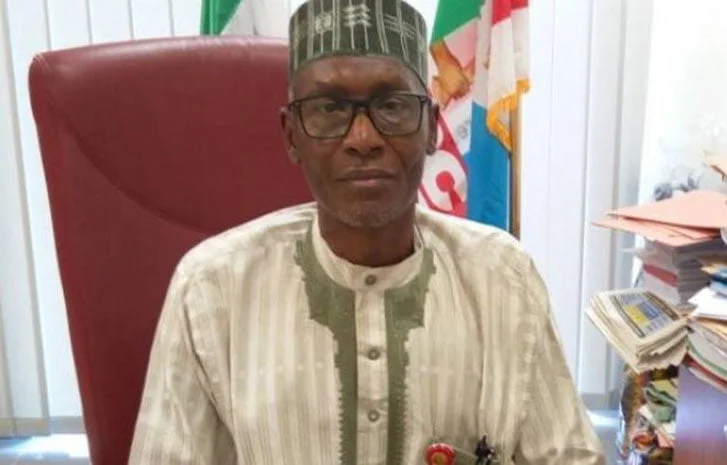
A former senator who represented Taraba Central on the platform of the APC, Abubakar Yusuf, has said the economic policies of Bola Ahmed Tinubu are not producing the desired outcomes.
His remarks mark one of the strongest criticisms yet from within the ruling All Progressives Congress (APC), highlighting growing concerns in sections of the party over the direction and impact of the administration’s economic reforms amid rising living costs and fiscal pressures nationwide.
Yusuf, who served in the Senate from 2015 to 2023 on the platform of the APC, made the comments during an appearance on Channels Television.
Responding to a question on whether the administration’s economic approach, often referred to as Tinubunomics, is working, Yusuf said it was not.
“For me, it is not working. I am a member of the APC. I would be the last person to hide the facts,” he stated.
He acknowledged that while the government might be implementing its policies diligently, the framework itself does not suit Nigeria’s present realities.
“Within the policy framework, yes, they are doing their best, but it is not the framework that is suitable for Nigeria at the point in time that President Asiwaju came into power,” he said.
Yusuf also faulted the immediate removal of fuel subsidy on the day the president assumed office, arguing that the decision lacked adequate consultation and planning.
“I am one of those who say President Asiwaju ought to have waited. Not on the day he was sworn in to say subsidy is gone. On what basis?” he asked.
He called for wider consultations before major fiscal decisions are taken.
“Sit down with your cabinet, sit down with your ministers, sit down with your advisers,” he said, rejecting claims that subsidy removal was justified solely on the basis of corruption.
The former lawmaker further identified structural weaknesses in the country’s budgeting system, particularly the envelope budgeting model.
“One of the basic problems is that before you budget, you should have a plan. The envelope system we have been operating has been you budget before you plan. That has been a major issue,” he said.
He argued that allocating spending limits without aligning them to concrete development strategies undermines implementation.
“If you give me an envelope which is contrary to my plan, whether it is plus or minus, there is no way I am going to implement my plan. It is bound to fail,” he said.
Yusuf advocated scrapping the envelope budgeting system, noting that he consistently opposed it during his time in the National Assembly.
“It is not good for us. It is not going to work well for us,” he added.
He also blamed poor capital releases and persistent deficit financing for weakening budget performance over the years.
“We could not meet 60 percent of our capital budget in all these years. No releases. If you make a budget and the release is very poor, there is no way the budget will be executed,” he stated.
According to him, weak fund disbursement mechanisms and reliance on deficit financing have entrenched a cycle of underperformance.
“Our budget ought to have been a surplus budget, but all our budgets have always been deficit financing budgets,” Yusuf said.