




Supreme Court Backs Tinubu’s Illegal Precedent, Grants Presidential Power To Suspend Elected Officials
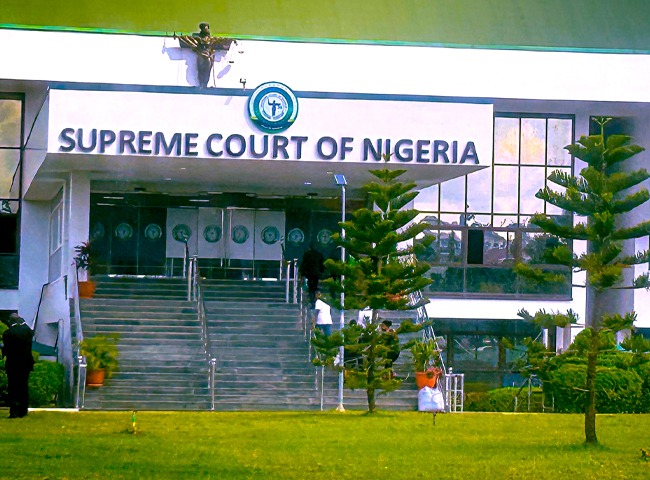
Following the suspension of elected government officials including Governor Siminalayi Fubara, his deputy and members of the Rivers State Assembly after declaration of state of emergency in the oil rich state on March 18, 2025 by Bola Tinubu, Supreme Court on Monday upheld presidential power to suspend elected officials during state of emergency in any state.
In Nigeria, the President’s power to suspend elected officers is a contentious issue, while Section 305 of the 1999 Constitution grants the President authority to declare a state of emergency, it does not explicitly permit suspending elected officials like governors or state assembly members.
While Tinubu’s action in the aftermath of the suspension due to crisis in the state has been widely criticized and tagged unconstitutional, the apex court, in a split decision of six-to-one on Monday, held that any Nigerian President, during a state of emergency, can suspend elected officials, but that such suspensions must be for a limited period.

Justice Mohammed Idris held, in the lead majority judgment, that Section 305 of the Constitution empowers the President to deploy extraordinary measures to restore normalcy where emergency rule is declared.
Justice Idris noted Section 305 is not specific on the nature of the extraordinary measures, thereby granting the President the discretion on how to go about it.
The judgment was on the suit filed by Adamawa and 10 other Peoples Democratic Party-led states challenging the propriety of the state of emergency declared by Bola Tinubu in Rivers State, during which elected state officials were suspended for six months.
Justice Idris, in the earlier part of the judgment, upheld the preliminary objections raised by the two defendants against the competence of the suit.
READ ALSO: Emergency Rule Suspension: Tinubu Did Rivers People No Favour – Briggs
In upholding the objections raised by the Attorney General of the Federation (AGF) and the National Assembly (the defendants), Justice Idris held that the plaintiffs (the 11 PDP states) failed to establish any cause of action capable of activating the original jurisdiction of the apex court.
He struck out the suit for want of jurisdiction, proceeded to also determine the case on the merits, and dismissed it.
However, Justice Obande Ogbuinya dissented and held that the case succeeded in part.
Meanwhile, the judgement is expected to draw reactions from Nigerians.