




REVEALED: More Fraud Exposed Following Revelations That Electoral Act Provisions Allow Candidates To Print Their Own Ballot Papers And INEC Officials To Accept Disputable Ballots

A former Resident Electoral Commissioner, REC, of the Independent National Electoral Commission, INEC, Mike Igini, has raised concerns over what he described as three “dangerous provisions” in the 2026 Electoral Act, warning that they could undermine the credibility of future elections, including the 2027 polls.
Speaking in an interview with ARISE News on Wednesday, Mike Igini said recent legal provisions, particularly Sections 63, 137 and 138, could open the door to widespread electoral manipulation, weaken accountability and shift the true battleground of elections from polling units to courtrooms.
Igini expressed concern over the growing role of the judiciary in determining electoral outcomes, noting that elections in Nigeria are increasingly decided through litigation rather than votes.
“Elections that ought to be determined conclusively at the polling unit are now being decided by the courts,” he said. “The courts in Nigeria are now being asked to answer political questions rather than legal questions.”
He warned that this trend exposes the judiciary to political pressure.
“Whenever courts are made to answer political questions such as who should be a candidate or who should be party chairman, the judiciary becomes vulnerable. Politicians will seek to capture the system.”
Igini described Section 63 as particularly dangerous, calling it a foundation level threat to credible elections.
“A ballot paper that does not bear the official security features of INEC can now be accepted by a presiding officer. This is extremely dangerous.
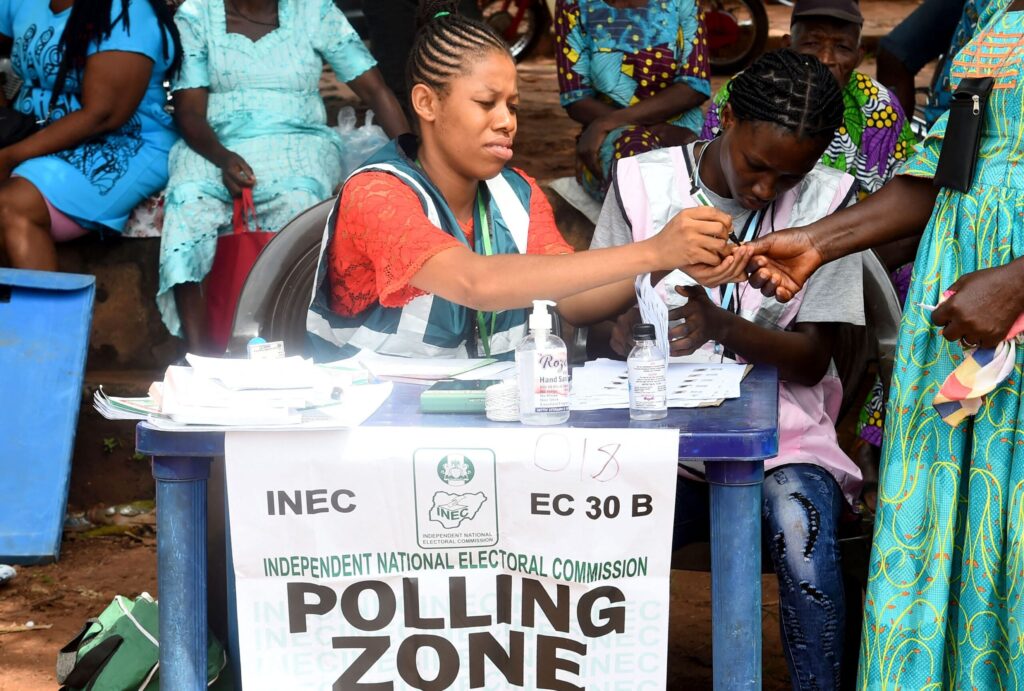
“What is the objective standard for a presiding officer to be satisfied? This opens the door for politicians to print and introduce fake ballot papers that must be accepted.”
On Section 138, he said it weakens accountability.
“An act or omission contrary to INEC directives but not explicitly against the law cannot be used to challenge an election. This effectively grants immunity for disobeying INEC guidelines.”
He also criticised Section 137 for shielding electoral officials from scrutiny.
“It is no longer necessary to join presiding or returning officers in election petitions even when they are directly responsible for misconduct.”

Drawing from his experience, Igini warned that these provisions could enable coordinated electoral fraud involving ad hoc staff.
“Those who conduct elections are largely ad hoc staff. Many are vulnerable to influence. Politicians infiltrate the system ahead of elections.”
He recounted incidents of bribery and premeditated malpractice.
“Before elections, money is distributed, even in foreign currency, to presiding officers. Some were told nothing would happen to them because the law protects them.”
Igini also revealed that individuals had previously attempted to manipulate voter accreditation using multiple identity cards.
He urged the National Assembly and INEC to act swiftly.
“INEC must urgently return to the National Assembly to seek amendment and repeal of these provisions, especially Section 63. The ballot is the foundation of the election.”
He dismissed the argument that electoral reform is a gradual process.
“How long does it take to amend clearly dangerous provisions? The 2022 Electoral Act, in parts, is a retrogression.”
Despite his concerns, Igini emphasised the critical role of the judiciary in safeguarding democracy.
“The judiciary must remain the last line of defence for democracy and the rule of law, but that responsibility has not been fully upheld.”
He called for a purposive interpretation of electoral laws by judges to prevent abuse.
“Courts must suppress the mischief these provisions enable and advance the remedy intended by law.”
Igini delivered his strongest warning when asked about confidence in the 2027 polls.
“If these provisions are not repealed immediately, the integrity of the 2027 election will be in flames.”
He stressed that both legal frameworks and human integrity are essential.
“Good laws without people of integrity will fail, but even weak laws can work if managed by committed individuals.”
Concluding, Igini framed the issue as a broader threat to Nigeria’s democratic future.
“Democracy cannot survive where the rule of law is undermined. What gives legitimacy to those in power is the credibility of the electoral process.”
He also underscored the importance of political opposition.
“There is no hope for democracy without a viable opposition. That is what guarantees accountability and balance,” he concluded.